Vinnytsia
Grey BeesVinnytsia is the home Vitalina made for herself and her daughter after leaving Sergeyich, and the place he imagines but has never gone to see. It stands in the novel both as a concrete point of separation and as the far-off possibility of renewed family contact: Sergeyich’s life has kept him among the mining towns of the east, while his former wife and daughter remain seventeen hours away.
A destination beyond Sergeyich’s travels
Sergeyich’s knowledge of Vinnytsia is largely second-hand. At forty-nine, he reflects that he has never gone to visit his in-laws there—or, in any meaningful sense, traveled anywhere beyond the mining towns and villages where his work sent him. As a safety inspector, he had descended into mines repeatedly; the occupational exposure left him disabled by silicosis at forty-two. His inability to make the journey is therefore tied not only to family estrangement but to a life narrowed by work and illness.
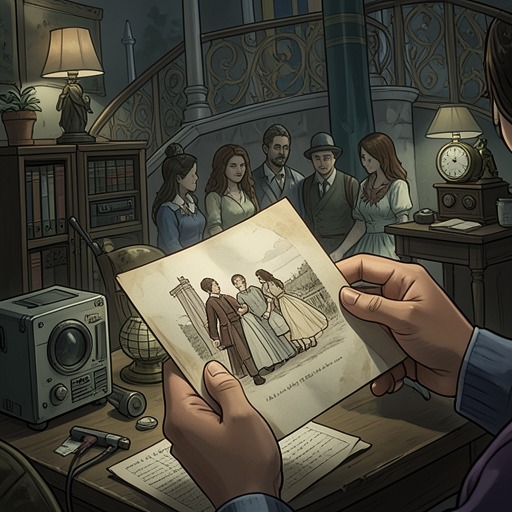
The city nevertheless enters his thoughts during the village’s wartime isolation. With his mobile phone and charger useless in a house without power or service, he considers calling Vitalina. He imagines rehearsing what to say, perhaps writing it down so he can read it without provoking her to hang up. He might ask about their daughter, or ask Vitalina what life in Vinnytsia is like. The imagined conversation makes the city less a place he knows than a question he has postponed asking.
The marriage remembered from afar
Vinnytsia is bound to the beginning of Sergeyich and Vitalina’s life together. When she first arrived after moving from the city, she unpacked neither all her bags nor suitcases before finding her red ant-pattern dress, ironing it, and walking toward the church at the end of their street. Sergeyich begged her to wear something else, embarrassed by the dress and by the attention it drew. Vitalina had expected him to accompany her; instead, he stopped at the gate, and she went on alone, watched by neighbours at their fences, windows, and gates.
That recollection gives the city a place in the couple’s history without making it the cause of their separation. Sergeyich wonders whether he might have kept the family together by reacting differently after their daughter was born, smiling more and criticizing Vitalina’s clothes less. But he also recognizes the practical divide: he would not have moved to live with her parents in Vinnytsia, and she would not have stayed in his village, even if their marriage had remained harmonious. The distance between the two homes is part of a larger incompatibility that, in his view, would eventually have become decisive.
Their old intimacy survives in small remembered details. During a period when they were getting along, Vitalina joked that Sergeyich should have been born in Paris because he could nurse a single glass for hours, like a Frenchman in a café. Her knowledge of Paris came, he supposes, from television or reading; she had never been abroad except for trips to Belarus to buy inexpensive perfume and knitwear. The memory places Vinnytsia within a wider horizon of imagined travel and modest excursions, while underscoring how little either spouse had seen of the world.
A distant connection renewed
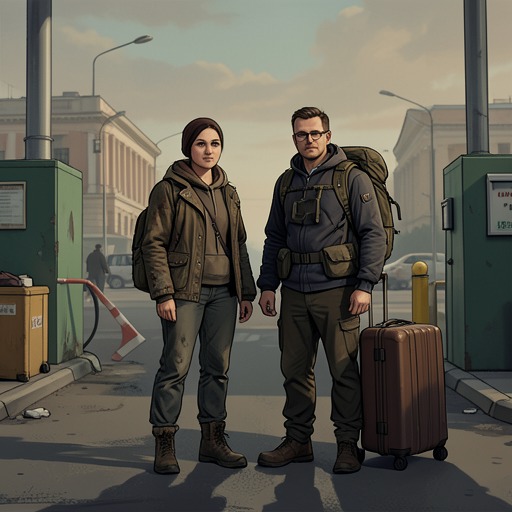
Years later, the separation remains visible in the way Sergeyich speaks to Vitalina: contact requires care, and he expects even a call to be difficult. Yet Vinnytsia is no longer only the setting of an unvisited in-law household. When Sergeyich escorts Aisha to a train, he calls Vitalina from the station and reports the arrival time and carriage number, describing Aisha again so his former wife will recognize her. The practical message opens a more personal exchange.
Vitalina notices that Sergeyich’s voice is shaky and asks if he is crying. He says he is tired, has slept little, and had trouble at the border. The silence that follows stretches between the station and Vinnytsia, seventeen hours away. Then Vitalina unexpectedly asks whether he will visit them too. Her voice sounds gentle, recalling the early days around their wedding. Sergeyich answers yes, but immediately retreats into qualification: first he needs to go home, where the Baptists are bringing coal for the winter.
Before ending the call, he asks Vitalina to kiss their daughter, Angelica, for him and says he will call again. The exchange does not establish that Sergeyich will make the journey or that the estrangement is resolved. It does, however, change the city’s meaning in his story: Vinnytsia is now not just the place he failed to visit, but the home from which an invitation reaches him, and to which he tentatively promises to come.